






By: Pepper Fisher
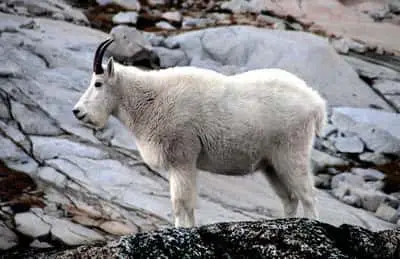
OLYMPIC NATIONAL PARK – The two-year effort to translocate mountain goats from Olympic National Park and the National Forest to their native habitat in the Cascade Mountains is complete. No more goats will be moved, and the unfortunate business of lethal removal begins.
A total of 381 non-native mountain goats have been removed from the park since September of 2018. 325 were translocated to the Cascades, 16 mountain goat kids were given permanent homes in zoos, there were 22 mortalities related to capture, 6 animals were euthanized because they were unfit for translocation, and four animals died in transit. 8 animals that could not be captured safely were lethally removed.
That accounts for a bit more than half of the estimated original population of 725 goats. Park Wildlife Branch Chief Dr. Patti Happe says many of the goats are living in areas where they can’t be safely captured.
“Capturing goats in the terrain that their in is tough. There were some capture mortalities, other ones just weren’t healthy enough to move, or the capture crew, while they could dart them, but there’s nowhere nearby to land to come and get them. And the other thing that was also happening is that, you know, you dart them but as soon as the drug takes effect, you know, they’re in such steep terrain at they fall and get seriously injured.”
The next phase involves sending in three teams of volunteers that will hunt and shoot as many of the remaining goats as they can. That process begins right after Labor Day in early September and will end in October when the weather will be too dangerous to safely hunt.
“So there’s a limited number of the remaining goats that can be safely accessed by people coming in from the ground, and I think that all those that can be safely accessed by the ground will be removed by these volunteers this fall. And then we’re going to go to aerial lethal removal next year.”
Aerial lethal removal is basically hunting from helicopters.
We asked Dr. Happe if she thought the goal of removing 100% of the goats on the Olympic Peninsula was attainable.
“I do believe that it’s going to be attainable. We don’t expect that we’re going to get a hundred percent of the goats, but we’re going to get enough, like 90%, that the remaining population just, there won’t be enough left to rebound. So it’s not required for us to get every last goat.”
A few of the non-native goats were imported to the peninsula early last century by groups who thought it would be fun to hunt them. The impact of the growing population on the Park’s environment has been unsustainable in some areas, and their encounters with hikers has led to injuries and deaths.