






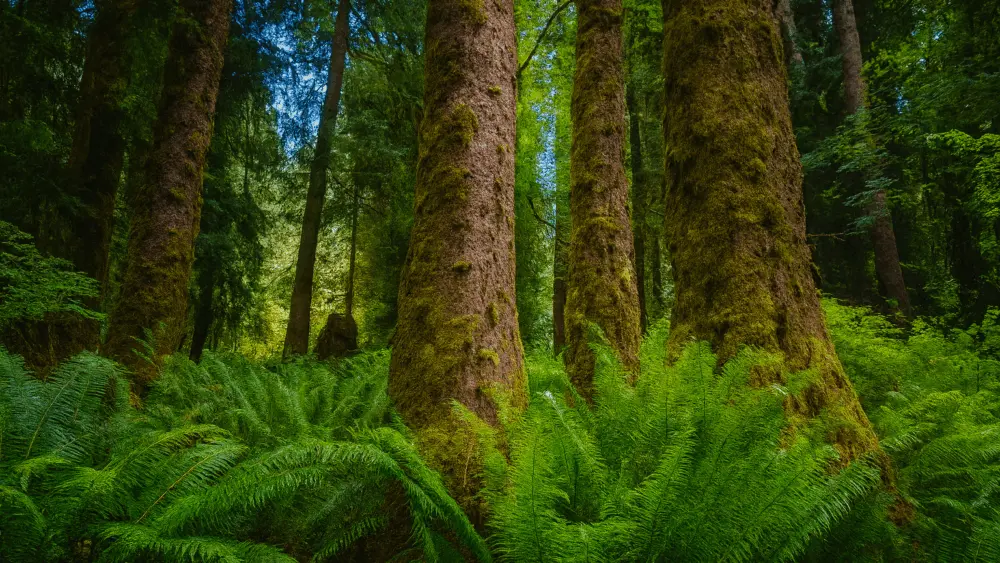
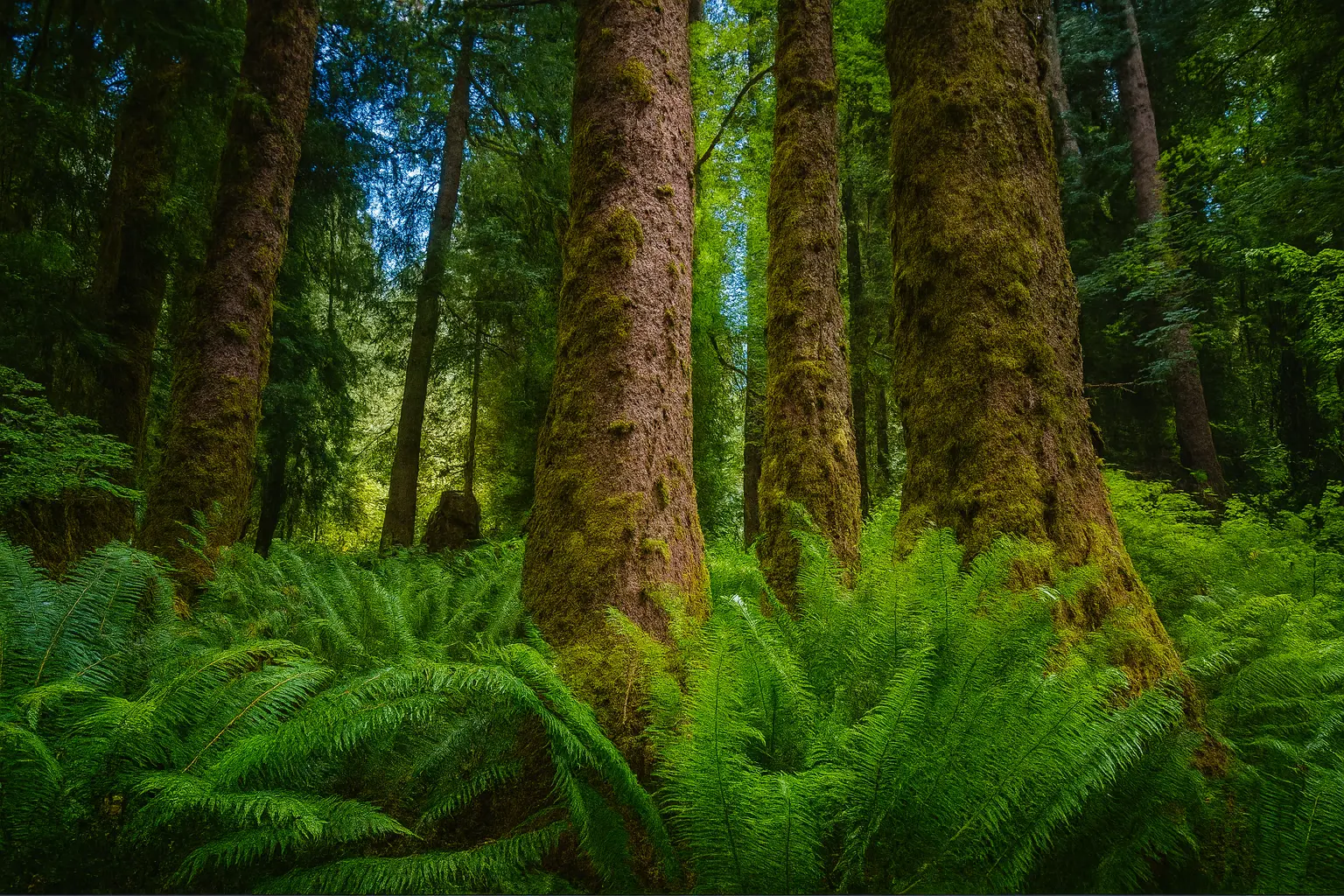
PORT ANGELES — Clallam County Commissioners heard a presentation Monday morning about a proposal that could conserve forestland near Joyce while still providing new revenue to the county.
The focus was on the so-called “Doc Holliday” timber sale, a 46-acre parcel of state trust land west of Port Angeles that some groups want preserved under the state’s Natural Climate Solutions program.
The presentation came from Bill Bryant, who wrote a recent opinion piece on the issue in the Tacoma News Tribune, and Brel Froebe with the Center for Responsible Forestry. Bryant gave background on the site and shared photos of the forest, while Froebe explained how the Natural Climate Solutions program could apply to the Doc Holliday tract this year.
Under the program, DNR can conserve carbon-rich “structurally complex” forests while compensating counties through a mix of replacement forestland and cash payments. For the Doc Holliday site, that could mean about $556,000 for new timberland purchases and up to $603,000 in direct county funding.
The property includes mature trees and layered canopy habitat, qualities that make it eligible for conservation under the program.
Commissioners showed mixed reactions. Randy Johnson questioned whether the county should take part.
“When we did an analysis of the last Marble Merrill Edge set-aside, this county bore the brunt of the cost of not being able to harvest those timberlands — about 4,300 acres worth roughly six hundred thousand dollars a year that would have gone to junior taxing districts, the county, the hospital district, and everyone else just trying to stay afloat. It’s really important that these funds be able to come to them on a continuing basis,” said Johnson
Mike French also voiced hesitation, citing the DNR’s own timber assessment.
“Based on this assessment, this stand does not meet the criteria for deferral under DNR’s old-growth policy. To be clear, that’s a science-based, objective standard. Stumps are abundant throughout the area, indicating the site was thoroughly logged. Core samples were taken across the stand, showing tree ages of about 120 to 125 years. The next sentence is the important one — Unit 5 is a high site class and has produced an environment with ideal growing conditions, resulting in large diameters in some tree species. So to me, that’s the reason it should be in production — not the reason it should be conserved,” said French
Mark Ozias said the proposal is worth exploring further.
“Now that there’s a mechanism that at least offers the potential to keep junior taxing districts whole — and possibly even expand the size of the trust in the future — it’s at least worth consideration,” said Ozias.
Commissioners took no action Monday, instead sending the proposal to the county’s Revenue Advisory Committee for further review.