






BY PEPPER FISHER
Port Angeles – The Washington state Department of Agriculture (WSDA) began a massive survey a few years ago with the goal of identifying every species of bee in our state. After wrapping up its second full year, and with the help of about 150 volunteers, the Washington Bee Atlas (WABA) has collected 30 new or rare bee species in our state.
According to a March news release, 17 species were new state records, meaning they are the first known records of finding the bee in Washington. Three of those were found here in Clallam County. And the program is just getting started.
One of those volunteers collecting bees in Clallam County is Karla Salp, Communications Consultant for the Washington State Dept. of Agriculture.
“Yeah, one of the surprising things is just where you find bees, and they’re, basically, everywhere. So, we’re going to all kinds of places. We have a lot of access to a lot of public lands, like Washington Department of Fish and Wildlife, DNR, Even Clallam County Parks has given us permission to collect on those properties. Here in Clallam County, I mean, I’ve collected everywhere from, like, Hurricane Ridge down to, you know, Dungeness River area, and everything in-between.”
The Bee Atlas is discovering large numbers of new and rare bees because it is the first statewide effort to sample them since the early 1900s, and most areas of the state are significantly under-sampled. But state funding is changing that. So are the program’s close partnerships with Oregon State University and Washington State University, along with the rapidly growing number of volunteers. Sound interesting? Volunteering to be a bee collector starts with an online course at your own pace.
“It’s really a monumental task that we’re taking on here, which is to try and survey the entire state, over the entire season. So, it’s going to take a lot of people stepping up to do this. Now is a great time, if people are interested, to join before things get, you know, really hot in the season. There are bees already flying, so it’s a good time to start the training. And you only have to complete the first three modules before you can do that field training, and then get out and start collecting. So, you don’t have to complete the whole thing online before you’re able to collect bees.”
Volunteers undergo training through OSU’s Master Melittologist Program. It’s similar to the Master Gardener Program, but the focus is on native bees. Volunteers learn to capture, preserve, and pin museum-quality specimens and document their host plants. They receive all the training and supplies they need to collect and pin the bees.
“You know, whether you know all about insects or know nothing about insects, this is a great time to be involved, because the work just has not been done thoroughly before. And that’s one of the exciting things about this, too, is like, there’s a lot of opportunity to find either new state records, new county records, potentially new species that have not been described before, just because it’s never been thoroughly looked at.”
To learn more search Washington Bee Atlas, and that will lead you to the State Dept. of Agriculture website.
State, county and city landowners who would like to permit volunteers to survey for native bees on their property can email pollinators@agr.wa.gov for more information.
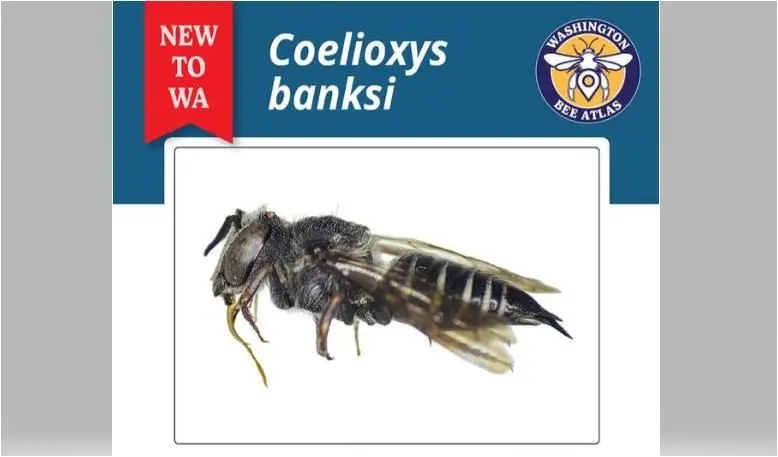
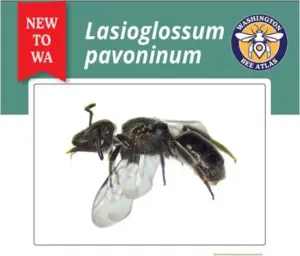
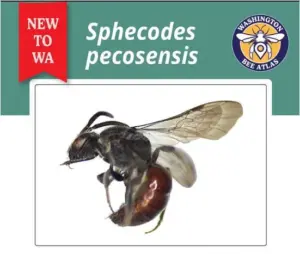
(The bees found in Clallam County which had never been recorded in Washington before are Coelioxys banksi, Lasioglossum pavoninum, and Sphecodes pecosensis)
(Washington State Dept. of Agriculture photos)