






By Pepper Fisher
BLYN, Wash. – One of the benefits of restoring the Jimmycomelately Creek estuary on Jamestown S’Klallam land in Blyn is that it allowed for what is now becoming the successful restoration of Olympia oysters to the southern shore of Sequim Bay. That effort is ongoing and taking another step forward this summer with the introduction of another influx of oyster shell substrate into the tidelands.
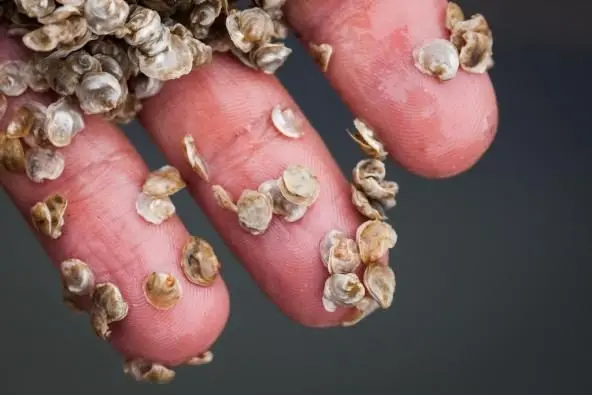
The program began in 2012 when the Tribe partnered with the Clallam Marine Resources Committee to try to bring back the only oyster native to Washington state, after its habitat was lost due to logging and mill activity in the bay last century. Approximately 6,200 Olympia oyster seed were planted on Jamestown’s Sequim Bay tidelands. The goal was to restore 2 acres of self-sustaining Olympia oysters by 2020.
How is the project going? That’s the question we asked Elizabeth Tobin, the Jamestown Tribe’s Shellfish Program Manager.
“Largely, we have met those goals. We’ve been able to set aside that acreage at the head of Sequim Bay, and seed that area with Olympia oysters seed, and we have seen some growth. We’ve also added two additional restoration plots. So, all in all, were looking closer to about two-and-a-half to three acres right now of really established area for Olympia oyster restoration.”
Olympia oysters are smaller, rounder and generally a little further out on the tidelands than the non-native Pacific oysters that so many of the oyster farmers raise in the Northwest. They’re also harder to establish once they’re gone.
But Tobin says they’re seeing an encouraging trend since their efforts began over 10 years ago.
“We have our very, kind of, specific restoration sites in Sequim Bay on the Tribal tide lands. But those sites, those kind of boundaries, oysters don’t recognize boundaries. Right? They’re going to repopulate areas that provide suitable habitat. So, we started doing these surveys to look at, kind of, what’s the overall distribution, where are we finding Olympia oysters? And one thing that’s really cool is, we’re finding Olympia oysters in pockets scattered all over this broad area of the head of Sequim Bay.”
This summer they will spread another 200 cubic yards of shell substrate at the head of Sequim Bay, but they’ll spread it across a broader area to encourage the small pockets of oysters that have shown them where they can, hopefully, continue to thrive.
The successful restoration effort in the southern part of Sequim Bay has spurred Clallam MRC to look for other potential restoration sites on non-native areas of the bay.
(Photo by Benjamin Drummond. 6-month-old Olympia oyster seed)