






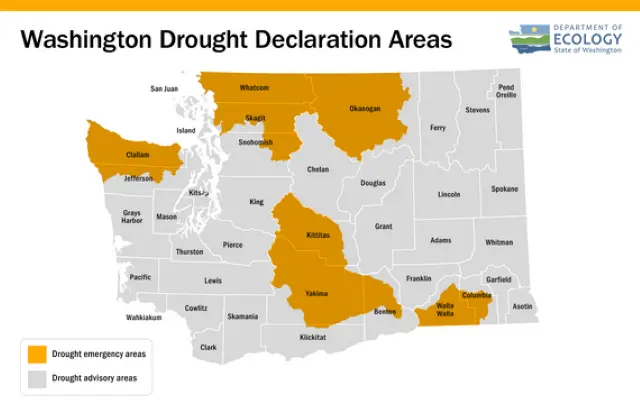
OLYMPIA – The Washington Department of Ecology has declared a drought emergency for watersheds in 12 counties throughout Washington, including here in Clallam County.
Early snowmelt, a lack of spring rain and low streamflows have prompted the order, which is declared when there is less than 75% of normal water supply and the risk of undue hardship. Declaring a drought emergency allows Ecology to process emergency water right permits and transfers.
New legislation passed this spring also makes $3 million in emergency drought funds available as grants to support communities, irrigation districts, Tribes and other public entities facing hardships.
Other counties affected by the drought declaration include Benton, Columbia, Jefferson, Kittitas, Klickitat, Okanogan, Skagit, Snohomish, Walla Walla, Whatcom and Yakima. The rest of the state remains under the drought advisory issued by Ecology July 5.
“This drought is already harming Washington communities, businesses and farms, and it’s another sign of the damage that climate change is causing to our state,” said Laura Watson, Ecology’s director. “Today’s drought declaration will help to rapidly deliver relief to these areas, but we need to also be taking steps to manage water wisely and prepare for a drier future.”
May and June of this year ranked as the fourth warmest and 11th driest such period since 1895. In June, Washington received only 49% of its usual rainfall. Those hot days led to early runoff of the snowpack that feeds many of our rivers, including the Sol Duc, the Hoh, the Dungeness and the Elwha rivers. Concerns about fish hatcheries and salmon migration have been reported due to low streamflows in those rivers.
Clallam County PUD’s Island View Water System is trucking in water because Olsen Creek’s streamflow is too low. That system serves a population of nearly 100 customers. And Neah Bay has been on mandatory watering restrictions since mid-May.
Current forecasts show a high likelihood of continued warm, dry weather through October.
“Climate change is making warm, dry summers more frequent, and droughts more severe,” said Ria Berns, manager of Ecology’s Water Resources program. “What we’re seeing this year is likely a sign of things to come.”